About Yojimbo
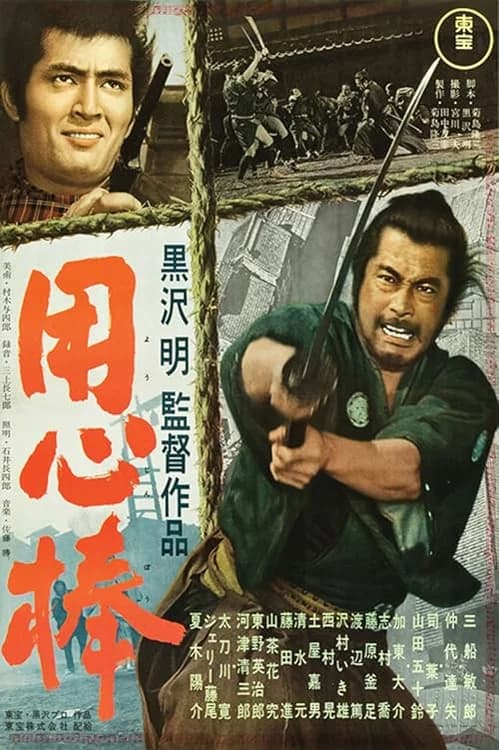
Akira Kurosawa's 1961 masterpiece Yojimbo stands as one of cinema's most influential action films, featuring Toshiro Mifune's iconic performance as a cunning, nameless ronin who arrives in a town torn apart by two rival criminal factions. With no allegiance to either side, he systematically plays both gangs against each other, using his wits and sword skills to orchestrate their mutual destruction. The film's brilliant premise transforms a simple story into a tense, darkly comic thriller about manipulation and moral ambiguity.
Mifune's physical performance is unforgettable—his shoulder shrugs, toothpick-chewing mannerisms, and calculated stillness create a character who dominates every scene through sheer presence. Kurosawa's direction is equally masterful, employing dynamic framing, deep focus cinematography, and atmospheric sound design to build suspense. The dusty, wind-swept town becomes a character itself, a moral vacuum where the ronin's intervention feels both cynical and strangely heroic.
Beyond its immediate entertainment value, Yojimbo's cultural impact cannot be overstated. It directly inspired Sergio Leone's A Fistful of Dollars, effectively birthing the Spaghetti Western genre, and its plot has been reinterpreted in countless films since. Viewers should watch Yojimbo not just for its historical significance, but for its timeless execution—a perfectly paced narrative, morally complex protagonist, and action sequences that remain visceral decades later. It's essential viewing for anyone interested in samurai cinema, director studies, or simply masterful storytelling.
Mifune's physical performance is unforgettable—his shoulder shrugs, toothpick-chewing mannerisms, and calculated stillness create a character who dominates every scene through sheer presence. Kurosawa's direction is equally masterful, employing dynamic framing, deep focus cinematography, and atmospheric sound design to build suspense. The dusty, wind-swept town becomes a character itself, a moral vacuum where the ronin's intervention feels both cynical and strangely heroic.
Beyond its immediate entertainment value, Yojimbo's cultural impact cannot be overstated. It directly inspired Sergio Leone's A Fistful of Dollars, effectively birthing the Spaghetti Western genre, and its plot has been reinterpreted in countless films since. Viewers should watch Yojimbo not just for its historical significance, but for its timeless execution—a perfectly paced narrative, morally complex protagonist, and action sequences that remain visceral decades later. It's essential viewing for anyone interested in samurai cinema, director studies, or simply masterful storytelling.