About Waking Life
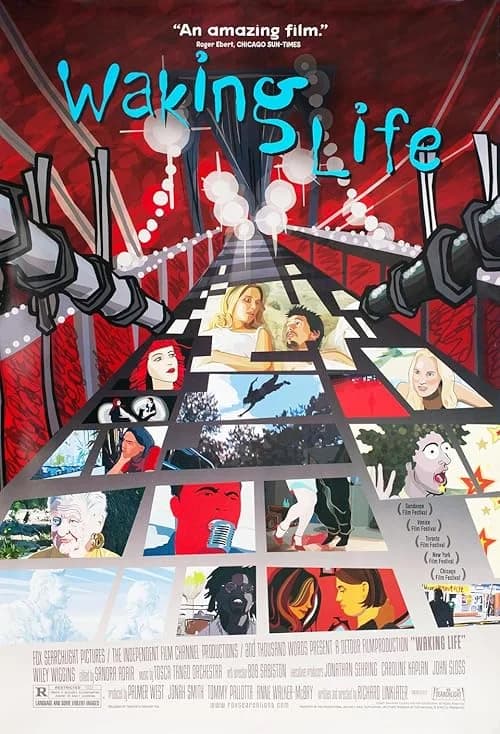
Waking Life (2001) stands as one of cinema's most unique philosophical explorations, directed by visionary filmmaker Richard Linklater. The film follows an unnamed protagonist who finds himself trapped in a recurring dream state, drifting through encounters with various characters who engage him in profound discussions about existential questions, free will, the nature of reality, and the meaning of consciousness. What makes this film particularly remarkable is its revolutionary visual style - using rotoscope animation to transform live-action footage into a constantly shifting, painterly dreamscape that perfectly mirrors the film's thematic concerns.
Linklater assembles an impressive ensemble of voices and personalities, including Ethan Hawke, Julie Delpy, and various philosophers and academics playing themselves. The performances, though often conversational rather than dramatic, feel authentic and engaging, serving as vehicles for the film's intellectual explorations rather than traditional character development. The direction masterfully balances these dense philosophical dialogues with the fluid, mesmerizing animation that keeps viewers visually engaged throughout.
Viewers should watch Waking Life for its unparalleled approach to cinematic philosophy and its technical innovation. The film doesn't provide easy answers but instead invites audiences to ponder life's biggest questions alongside its protagonist. Its dream logic structure and visual experimentation create an immersive experience that feels both intellectually stimulating and aesthetically groundbreaking. For anyone interested in animation, philosophy, or films that challenge conventional storytelling, Waking Life remains an essential viewing experience that continues to inspire discussion and analysis decades after its release.
Linklater assembles an impressive ensemble of voices and personalities, including Ethan Hawke, Julie Delpy, and various philosophers and academics playing themselves. The performances, though often conversational rather than dramatic, feel authentic and engaging, serving as vehicles for the film's intellectual explorations rather than traditional character development. The direction masterfully balances these dense philosophical dialogues with the fluid, mesmerizing animation that keeps viewers visually engaged throughout.
Viewers should watch Waking Life for its unparalleled approach to cinematic philosophy and its technical innovation. The film doesn't provide easy answers but instead invites audiences to ponder life's biggest questions alongside its protagonist. Its dream logic structure and visual experimentation create an immersive experience that feels both intellectually stimulating and aesthetically groundbreaking. For anyone interested in animation, philosophy, or films that challenge conventional storytelling, Waking Life remains an essential viewing experience that continues to inspire discussion and analysis decades after its release.