About The Killing
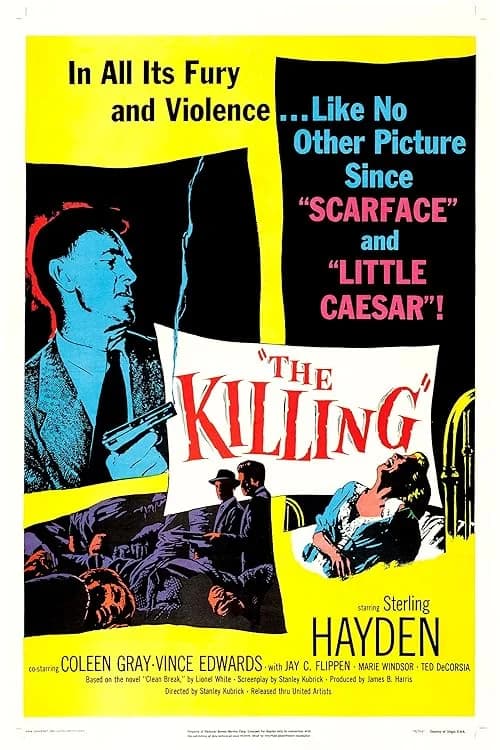
Stanley Kubrick's 1956 crime classic 'The Killing' remains a masterclass in tension and narrative structure. The film follows Johnny Clay (Sterling Hayden), a seasoned crook who meticulously assembles a five-man team to execute a seemingly perfect $2 million robbery at a racetrack. Kubrick's direction is taut and economical, using a non-linear timeline to heighten suspense as each character's role and personal flaws are revealed. The intricate planning sequences contrast brilliantly with the inevitable unraveling, driven by greed, betrayal, and sheer bad luck.
Sterling Hayden delivers a granite-jawed, determined performance as Clay, embodying the doomed professionalism of the noir anti-hero. The supporting cast, including Elisha Cook Jr. as the nervously vulnerable cashier George and Marie Windsor as his treacherous wife Sherry, adds layers of desperation and moral decay. The crisp black-and-white cinematography and sharp, hard-boiled dialogue create an atmosphere of relentless fatalism.
Viewers should watch 'The Killing' not only as a gripping heist thriller but as a pivotal work in Kubrick's early career, showcasing the precise, cold-eyed storytelling that would define his later masterpieces. Its influence on the caper genre is immense, from its detailed procedural elements to its bleak commentary on the futility of perfect crime. For fans of noir, crime dramas, or cinematic craftsmanship, this 84-minute film is an essential and utterly compelling watch.
Sterling Hayden delivers a granite-jawed, determined performance as Clay, embodying the doomed professionalism of the noir anti-hero. The supporting cast, including Elisha Cook Jr. as the nervously vulnerable cashier George and Marie Windsor as his treacherous wife Sherry, adds layers of desperation and moral decay. The crisp black-and-white cinematography and sharp, hard-boiled dialogue create an atmosphere of relentless fatalism.
Viewers should watch 'The Killing' not only as a gripping heist thriller but as a pivotal work in Kubrick's early career, showcasing the precise, cold-eyed storytelling that would define his later masterpieces. Its influence on the caper genre is immense, from its detailed procedural elements to its bleak commentary on the futility of perfect crime. For fans of noir, crime dramas, or cinematic craftsmanship, this 84-minute film is an essential and utterly compelling watch.