About Picnic at Hanging Rock
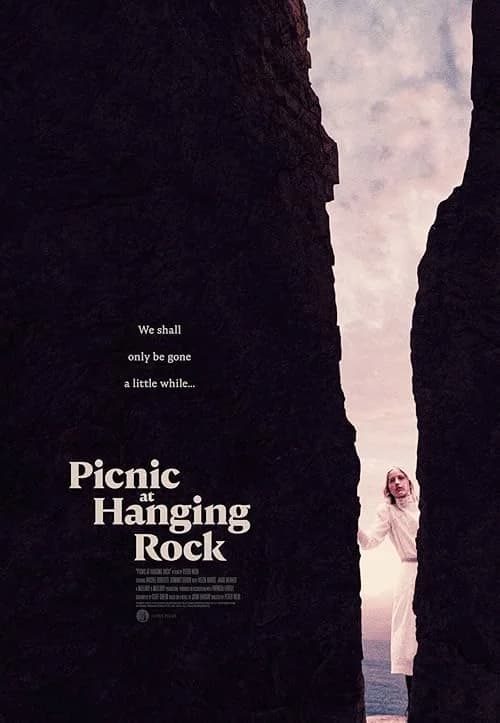
Peter Weir's 1975 masterpiece 'Picnic at Hanging Rock' remains one of Australian cinema's most enigmatic and atmospheric achievements. Set on a stifling Valentine's Day in 1900, the film follows students and teachers from Appleyard College, a strict girls' boarding school, as they embark on a picnic to the ancient volcanic formation of Hanging Rock. What begins as a genteel excursion descends into profound mystery when three students and one teacher inexplicably vanish amidst the sun-drenched rocks, leaving no trace and fracturing the ordered world they left behind.
The film is less a conventional mystery than a hypnotic meditation on repression, time, and the collision between rigid European colonialism and the ancient, indifferent Australian landscape. Weir's direction is masterfully atmospheric, using dreamlike pacing, symbolic imagery, and a haunting score by Bruce Smeaton (featuring panpipes and original compositions) to create an overwhelming sense of unease. The performances, particularly from Helen Morse as the romantic Mademoiselle de Poitiers and Rachel Roberts as the formidable headmistress Mrs. Appleyard, are perfectly pitched, conveying the societal tensions that unravel in the aftermath.
Viewers should watch 'Picnic at Hanging Rock' for its unparalleled mood and visual poetry. It eschews easy answers, instead immersing you in a sensory experience of heat, lace, and looming rock that lingers long after the credits roll. Its influence on atmospheric filmmaking is immense, and its questions about the unknown continue to resonate. This is essential viewing for fans of art-house mystery and cinematic tone poems.
The film is less a conventional mystery than a hypnotic meditation on repression, time, and the collision between rigid European colonialism and the ancient, indifferent Australian landscape. Weir's direction is masterfully atmospheric, using dreamlike pacing, symbolic imagery, and a haunting score by Bruce Smeaton (featuring panpipes and original compositions) to create an overwhelming sense of unease. The performances, particularly from Helen Morse as the romantic Mademoiselle de Poitiers and Rachel Roberts as the formidable headmistress Mrs. Appleyard, are perfectly pitched, conveying the societal tensions that unravel in the aftermath.
Viewers should watch 'Picnic at Hanging Rock' for its unparalleled mood and visual poetry. It eschews easy answers, instead immersing you in a sensory experience of heat, lace, and looming rock that lingers long after the credits roll. Its influence on atmospheric filmmaking is immense, and its questions about the unknown continue to resonate. This is essential viewing for fans of art-house mystery and cinematic tone poems.