About Chariots of Fire
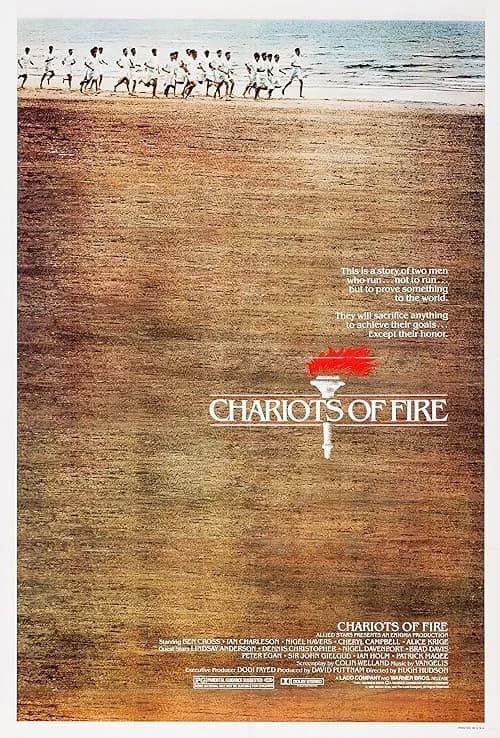
Chariots of Fire is a profoundly moving biographical drama that transcends the sports genre to explore themes of faith, identity, and personal conviction. Directed by Hugh Hudson, this 1981 masterpiece tells the parallel stories of two British athletes preparing for the 1924 Paris Olympics: Harold Abrahams, a Jewish Cambridge student running to overcome prejudice, and Eric Liddell, a devout Scottish missionary who runs for the glory of God.
The film's brilliance lies in its nuanced character study. Ben Cross delivers a compelling performance as the driven, socially-conscious Abrahams, while Ian Charleson is unforgettable as the principled Liddell, whose refusal to run on Sunday becomes a powerful statement of faith. Their contrasting motivations—one running against anti-Semitism, the other for divine purpose—create a rich thematic tapestry about what truly drives human achievement.
Beyond its Oscar-winning score by Vangelis (whose iconic theme remains instantly recognizable), Chariots of Fire excels in its period authenticity and emotional depth. The racing sequences are filmed with poetic grace, but the film's real power emerges in quieter moments of personal struggle and moral choice. Viewers should watch this classic not just for its historical significance or sporting drama, but for its timeless examination of how personal beliefs shape our greatest triumphs. It remains one of cinema's most eloquent statements about the intersection of athletic excellence and human spirit.
The film's brilliance lies in its nuanced character study. Ben Cross delivers a compelling performance as the driven, socially-conscious Abrahams, while Ian Charleson is unforgettable as the principled Liddell, whose refusal to run on Sunday becomes a powerful statement of faith. Their contrasting motivations—one running against anti-Semitism, the other for divine purpose—create a rich thematic tapestry about what truly drives human achievement.
Beyond its Oscar-winning score by Vangelis (whose iconic theme remains instantly recognizable), Chariots of Fire excels in its period authenticity and emotional depth. The racing sequences are filmed with poetic grace, but the film's real power emerges in quieter moments of personal struggle and moral choice. Viewers should watch this classic not just for its historical significance or sporting drama, but for its timeless examination of how personal beliefs shape our greatest triumphs. It remains one of cinema's most eloquent statements about the intersection of athletic excellence and human spirit.